

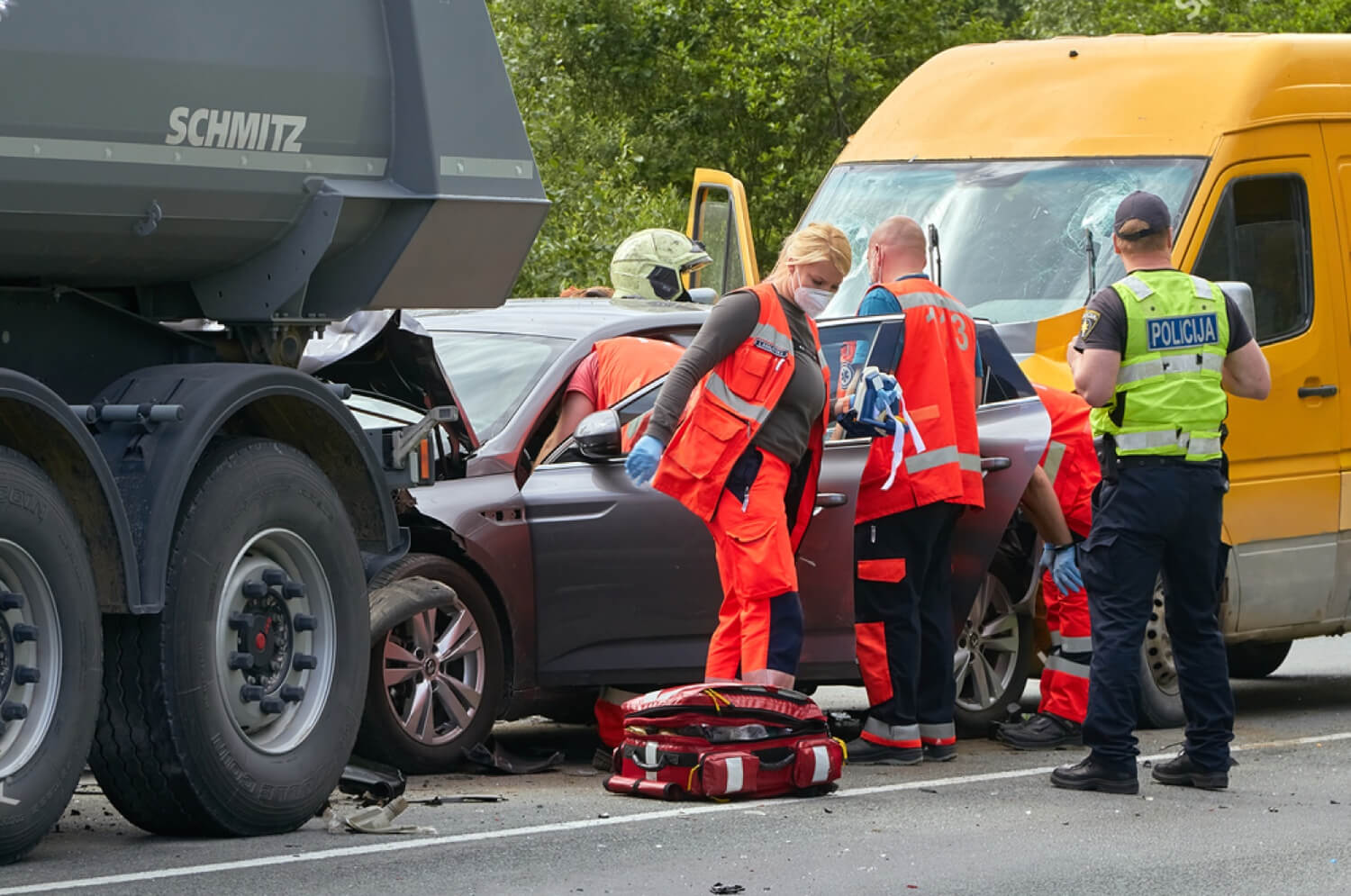
When a collision involves an 18-wheeler, it’s not just a “bigger car accident.” Truck crashes introduce an entirely different level of complexity—federal safety laws, multiple corporate players, and insurance limits that can reach millions. The stakes are high, and evidence can vanish quickly. That’s where an experienced truck accident lawyer becomes essential.
This guide breaks down how truck accidents differ from car crashes under Connecticut law, who can be held liable, and what evidence makes or breaks your case. Whether your crash happened on I-395, Route 2, or a Norwich city street, you’ll see why commercial wrecks require a specific strategy—and how a truck accidents lawyer can help protect your rights, preserve vital data, and pursue fair compensation.
Quick Answer: What Makes Truck Wrecks Different?
Truck crashes are governed by a web of state and federal rules that don’t apply to regular cars. These cases involve bigger vehicles, bigger injuries, and far more complicated investigations.
Here’s what sets them apart:
- FMCSA regulations & Hours-of-Service limits
- Electronic logs & ECM data tracking speed and fatigue
- Company policies, dispatch pressure, and driver training gaps
- Maintenance and inspection records proving whether the rig was safe
- Multiple defendants and larger insurance policies
Because trucking companies move fast after a crash, a truck accident lawyer must act immediately to preserve black-box data, driver logs, and dash-cam footage before they’re lost.
Regulations That Shape Truck Cases
Federal and state trucking regulations create the framework that determines how fault and responsibility are proven after a commercial truck crash.
FMCSA Rules 101
The Federal Motor Carrier Safety Administration (FMCSA) sets national standards for trucking. Drivers must follow strict Hours-of-Service (HOS) limits, complete pre-trip inspections, undergo drug and alcohol testing, and maintain current qualifications. If they break these rules, it can count as negligence per se—automatic fault under the law. A skilled truck accident attorney CT knows how to connect these violations directly to your injuries.
Company Duties Beyond the Driver
Motor carriers can’t hide behind their drivers. They’re responsible for hiring and supervising safe operators, enforcing realistic schedules, maintaining trucks, and conducting internal safety audits. Dispatchers pushing unrealistic delivery windows or neglecting maintenance logs may make the company directly liable. Your 18-wheeler accident lawyer digs into these records to expose systemic negligence.
Who Can Be Liable in a Truck Crash?
Truck accidents rarely involve just one responsible party—multiple companies and individuals can share blame for causing or contributing to a crash.
Primary Defendants
Truck cases often involve multiple parties, such as:
- The truck driver and their employer (motor carrier)
- The tractor or trailer owner
- Maintenance contractors or mechanics
- Cargo loaders or shippers
- Freight brokers and logistics companies
A semi-truck accident lawyer, Connecticut investigates each link in the chain to identify who cut corners.
Theories of Liability
Liability can stem from several forms of negligence:
- Driver error or HOS violations
- Negligent hiring, retention, or supervision
- Faulty maintenance or inspection failures
- Unsecured or overloaded cargo
- Defective parts like brakes or tires
Comparative Fault in Connecticut
Connecticut uses a modified comparative negligence rule—your compensation drops by your percentage of fault and ends entirely if you’re more than 50 percent responsible. A Norwich truck crash attorney ensures evidence fairly represents your role and keeps insurers from shifting blame.
Evidence: What Exists in Truck Cases (That Cars Don’t Have)
Truck accident investigations go far beyond simple photos or police reports—they involve powerful digital data and detailed corporate documentation unavailable in typical car crashes.
High-Value Digital Data
Trucks generate electronic data that can tell the whole story.
- ECM/EDR “black-box” downloads reveal speed, braking, and throttle use.
- ELD and GPS logs show driving hours, rest periods, and routes.
- Dispatch and telematics data verify schedule pressure and fatigue.
In one case, ECM data proved a trucker hadn’t rested in 18 hours—evidence that changed everything.
Paper & Physical Proof
Important documents include inspection reports, maintenance records, bills of lading, weight and securement checklists, driver qualification files, and safety manuals. These materials help a truck accident lawyer connect corporate policies to crash conditions.
Preservation Is Urgent
Trucking companies may delete or overwrite data within days. Attorneys issue spoliation letters immediately to lock down evidence before it disappears. Fast action can make the difference between a strong case and a lost opportunity.
Injuries & Damages: Why Truck Crashes Often Cost More
Truck collisions hit harder—literally and financially—causing devastating injuries, lifelong disabilities, and major expenses far beyond typical car accident claims.
Severity & Long-Term Needs
A semi-truck can weigh 20 times more than a car, and the impact reflects that. Victims often suffer traumatic brain injuries, spinal cord damage, multiple fractures, and lifelong disabilities requiring life-care plans and long-term wage-loss projections.
Insurance Landscape
Commercial trucks typically carry high-limit policies plus excess or umbrella coverage. In some cases, your own UM/UIM policy can also apply. Strategic FMCSA violations evidence and policy-stacking analysis help a truck accident lawyer maximize compensation.
Truck vs. Car: Side-by-Side Differences
| Aspect | Car Accidents | Truck Accidents |
| Defendants | One driver | Driver + carrier + others |
| Rules | Traffic laws | Traffic + FMCSA |
| Evidence | Police report, photos | Logs, ECM, dispatch data |
| Damages | Moderate | Catastrophic, lifelong |
| Negotiation | One insurer | Multiple layers, big limits |
| Timeline | Shorter | Longer, complex discovery |
These differences explain why hiring a truck accident lawyer early makes such a difference in outcome and recovery.
Connecticut Timelines & Procedure
Deadlines and procedures in Connecticut can make or break a truck accident case, so knowing when and how to act is critical.
Deadlines
Most Connecticut injury claims have a two-year statute of limitations, though certain governmental or wrongful-death actions can be shorter.
Venue & Process
A truck accident attorney CT begins with an investigation, then submits a demand package. If insurers resist, the case proceeds through discovery, mediation, and trial—sometimes in federal court for interstate carriers. Timing and jurisdiction choices can greatly affect leverage.
What To Do After a Truck Crash
What you do in the hours after a truck crash can determine your health, safety, and the strength of your future legal claim.
Medical & Documentation
Get emergency treatment immediately, even if you feel “okay.” Follow every medical instruction, track bills, and record how pain limits your work or daily life.
Protect Your Claim
Take photos of vehicles and the crash scene, keep your damaged car, and avoid recorded insurer statements. A truck accident lawyer can send preservation letters to trucking companies within days to secure crucial ECM and log data.
How a Truck Accidents Lawyer Builds Leverage
Early evidence collection creates negotiating power. Your attorney coordinates with reconstruction experts, human-factors specialists, and trucking-safety consultants to analyze records and testimony. They craft a life-care plan, calculate full economic and non-economic damages, and prepare for trial from day one—forcing insurers to take your case seriously.
A seasoned Norwich truck crash attorney understands that preparation often leads to fair settlement long before trial.
FAQs
Q. Is a truck accident case worth more than a car crash?
- Often yes, because injuries and commercial coverage limits are higher. Final value depends on evidence, policy limits, and the cost of future care.
Q. Do I sue the driver or the company?
- Both. The driver’s employer is vicariously liable and may also be directly liable for unsafe hiring, training, or dispatch practices.
Q. What if the trucker blames me?
- Comparative negligence can reduce recovery, but ECM data, dash-cams, and reconstruction evidence often disprove false blame.
Q. How fast should I act?
- Immediately. Black-box and camera data can be deleted in days. Your 18-wheeler accident lawyer sends preservation notices right away.
Q. Do most cases settle?
- Yes—once liability and damages are documented. However, serious cases may still proceed to trial for full compensation.
Talk to a Truck Accidents Lawyer in Norwich, CT
If you’ve been hurt in a commercial vehicle crash, speak with a truck accident lawyer at Morelli Wolfe today. We’ll review your case, explain Connecticut liability laws, and outline your recovery options. Bring your crash report, photos, medical records, and insurance details for a free, confidential consultation.
Our team works on a contingency basis—no fees unless we win. Contact us or schedule your in-person or virtual meeting now to start building your case and reclaim your peace of mind.